


Our IELTS Test Preparation courses are available at three levels, based on each student’s current English proficiency and target IELTS band score. Following a placement test, students will be advised whether they are ready to begin an IELTS preparation course or should first strengthen their general English skills. (BOOK PT NOW)
Designed for intermediate-level learners, IELTS Foundation builds the essential language and test-taking skills required across all four IELTS components: Listening, Reading, Writing, and Speaking. Students develop listening comprehension, reading strategies, academic vocabulary, grammar, essay organization, and confident spoken communication. They also learn about IELTS question types, assessment criteria, time management, and effective test-taking techniques. Five full-length practice tests, together with detailed teacher feedback, help students identify areas for improvement and build a strong foundation for achieving a target band score of 5.5–6.0.
IELTS Booster is designed for upper-intermediate learners aiming for a band score of 6.5–7.0. The course strengthens students’ ability to understand complex listening passages, apply advanced reading strategies, produce well-structured academic essays and reports, and communicate fluently and accurately in the Speaking test. Students receive focused training in IELTS assessment criteria, question analysis, vocabulary development, grammar accuracy, time management, and higher-level test-taking strategies. Five full-length practice tests and personalized teacher feedback support measurable improvement. Students also receive access to a self-study portal, allowing them to practise anytime, from anywhere.
IELTS High Achiever is designed for upper-intermediate to advanced learners who already possess a strong English foundation and aim to achieve a band score of 7.0 or above. The course focuses on refining advanced skills across Listening, Reading, Writing, and Speaking. Students learn to interpret complex information, respond precisely under time pressure, develop sophisticated arguments, use a wider range of academic vocabulary and grammar, and communicate with greater fluency, accuracy, and coherence. Targeted instruction based on IELTS assessment criteria helps students overcome individual weaknesses and maximize their scores. The course includes five full-length practice tests, detailed teacher feedback, and access to a self-study portal for flexible practice anytime, from anywhere.
Kaplan ၏ နှစ်ပေါင်း ၇၀ ကျော်ကြာ Test Preparation လောကတွင် ရပ်တည်လာသော အတွေ့အကြုံများနှင့် World Leader in Test Preparation ဖြစ်ပြီး နိုင်ငံပေါင်း (၃၀) ကျော်တွင် ကျောင်းသားပေါင်း (၄)သန်းကျော်ကို အမှတ်ကောင်းများရရှိပြီး မိမိတို့တက်ရောက်လိုသော တက္ကသိုလ်ကောင်းများတွင် တက်ရောက်နိုင်စေရန် အောင်ချက်ရာနှုန်း ( 95%) ဖြင့်သင်ကြားပေးနေပါသည်။
Kaplan ၏ဆရာ၊မများသည် Kaplan Certified Native Speaker and US Graduate ဆရာ၊ဆရာမများဖြစ်ပြီး ၄င်းတို့ကိုယ်တိုင် IELTS နှင့် TOEFL တွင်အမှတ် 90% ကျော်ရရှိထားပြီး Kaplan ၏ Teacher’s training များပြီးမြောက်ထားသူများဖြစ်ပါသည်။
| Time | Start Date | End Date | Course Duration |
|---|---|---|---|
| 9:00am – 11:30am | 04/05/2020 | 03/06/2020 | 5 weeks |
| 12:00pm – 2:30pm | 04/05/2020 | 03/06/2020 | 5 weeks |
| 3:00pm – 5:30pm | 04/05/2020 | 03/06/2020 | 5 weeks |
| 6:00pm – 8:30pm | 04/05/2020 | 03/06/2020 | 5 weeks |
What courses and what levels can I attend?
Before you join any class, we have placement test to assess your level of English (speaking, reading, writing and grammar/vocabulary test) and put you into the correct class.
What days and times are the classes?
Can I move to another level right after attending a class?
Individual assessment is an ongoing process throughout the term. There are exams during the term, and Starfish also monitors the progress and participation of each student in order to best help students improve their English skills. Those who have met the class requirements — exams, attendance and class work– can continue to the next level.
Do I get a certificate?
We provide certificate of completion to students who have met the class requirements.
Where are the students from?
We have students from different parts of Yangon city and also students of different ethnic groups from different parts of Myanmar.











Timing: 60 minutes
Number of questions: 40
The question types used in the reading section can be made up of any of the following: multiple choice, identifying information, identifying the writer’s views/opinions, matching tasks, completion (e.g. sentence, table, note completion, etc.) and short-answer questions.The reading section of the IELTS consists of three passages from books, journals and articles from magazines or newspapers. These are all written for a non-specialist audience using different styles, e.g. a passage may be written narrative, descriptive or argumentative styles (there will be at least one text containing a logical argument).
Once this test section has started you will immediately start answering questions directly on to your answer sheet throughout the allotted time. There will be no transfer time, as with the listening section of the test.
Each question is worth one mark, so your overall score is out of 40 but is translated into a banded score from 0-9. All sections are weighted equally and will contribute equally to your overall band score.
The listening section of the IELTS exam is the same across both Academic and General Training exams.
Timing: 30 minutes (plus 10 minutes transfer time)
Number of questions: 40
There are a mixture of question types used in the listening section and can be any of the following: multiple choice, matching, labelling, form/table/flow-chart completion, sentence completion.You will listen to 4 recordings (10 questions each), and you will be able to make notes on your question paper during all sections. You will then have 10 minutes at the end of the exam to transfer your answers to your answer sheet.
Recordings 1 and 2 are based around social situations and contexts, whereas recordings 3 and 4 are based on academic scenarios. Recordings 1 and 3 will be conversations, whereas 2 and 4 are monologues.
Examiners will be looking for you to demonstrate that you understand the main ideas and detailed factual content, as well as opinions and attitudes of the speakers and the development of ideas throughout each section.
Each question is worth one mark – so your overall score is out of 40, but is translated into a banded score from 0-9. All sections are weighted equally and will contribute equally to your overall band score.
Timing: 60 minutes
Number of questions: 2
In the first task you are required to describe or interpret some visual information, such as a graph or diagram in your own words. The second question requires you to respond to an opinion, argument or problem.
Task One requires you to write at least 150 words describing information presented in a chart/graph. Alternatively you may be given a diagram of a device or a process and asked to describe how it works. You will need to write in a neutral or academic style, including the most relevant points in the stimuli, leaving out insignificant or minor points. Although in this section you can go over 150 words you should spend no more than 20 minutes on this task, as Task Two is worth more of your overall score.
Task Two requires you to write at least 250 words and you will lose marks if your answer does not meet this requirement. You are permitted to go over the word count, although you should bear in mind that only 40 minutes should be spent on this task (including time for checking and correcting your answer). You should also be careful of making your answer too long, as you will be penalized for irrelevance if the response is off-topic or if it is not written in full (bullet points and note form will not be permitted).
Note that this question is worth twice as much to your final writing band score as task one, so it is important to ensure your answer is relevant and answers the question in full.
Both tasks are assessed using four main criteria:
Your score will be translated into whole and half bands 0-9, which will contribute to your overall banded score.
Timing: 11 – 14 minute (plus 10 minutes transfer time)
Number of questions: 3
The speaking section of the IELTS exam consists of a recorded oral interview, separate to the rest of the paper. The session will start off with introductory topics such as work, family and interests. These questions will be taken from the examiner’s script to ensure consistency across candidates.
The next part of the interview is where the interviewer will give you a task card, which will ask you to speak about a particular topic and includes a list of points that should be incorporated. You will have a couple of minutes (along with a pencil and paper) to make notes and structure what you would like to say. The examiner will then ask you to talk for 1-2 minutes, after which they will stop you and ask you a couple of questions on the topic.
In the final section of the interview, you and the examiner will discuss issues related to the topic in the previous section. It’s in this section where you will get to express and justify opinions. This part usually lasts around 4-5 minutes.
Your speaking section will be scored by the trained examiner, who will assess you using the following criteria:
The International English Language Testing System (IELTS) is designed to measure language proficiency of people who would like to work or study in places where English is the language of communication.
This test is designed for those planning to study in higher education (undergraduate and graduate studies) or those seeking professional registration. The IELTS Academic assess whether a person is well-equipped to begin studying or training in an English-speaking environment.
The IELTS General Training test should be taken by those who are going to complete secondary education in places where English is the language of communication or to participate in work experience or training programs. The IELTS General Training may be required for migration to Australia, New Zealand, Canada and the UK.
The listening and speaking sections are the same for both tests, whereas the reading and writing sections differ. Find out more about the format of each exam below:
| IELTS Academic | IELTS General Training | |
| Test Length | 2 hours, 45 minutes | 2 hours, 45minutes |
| Speaking Section | 11-14 minutes. Face-to-face interview with an examiner, including an introduction and discussion on a familiar topic. | 11-14 minutes. Face-to-face interview with an examiner, including an introduction and discussion on a familiar topic. |
| Reading Section | 60 minutes. 3 long texts taken from books, journals, magazines and newspapers. Selected for a non-specialist audience, with topics of general interest. | 60 minutes. 5-6 texts taken from notices, advertisements, company handbooks, official documents, books and newspapers. Materials likely to be encountered on a daily basis in an English-speaking environment. |
| Writing Section | 60 minutes. Students will be asked to describe a table, chart or diagram (at least 150 words) and write a short essay (at least 250 words) in an academic, semi- formal/neutral style. | 60 minutes. Students will be asked to write a letter (at least 150 words) and a short essay (at least 250 words) in a personal, or semi-formal/neutral style. |
| Listening Section | 30 minutes plus 10 minutes’ transfer time. 4 sections containing 10 questions each. The first two deal with every day social contexts. Sections 3 and 4 deal with educational and training contexts. | 30 minutes plus 10 minutes’ transfer time. 4 sections containing 10 questions each. The first two deal with every day social contexts. Sections 3 and 4 deal with educational and training contexts. |
| Scoring | An individual band score of 1-9 for each skill section. The average produces your overall band score of 1-9. | An individual band score of 1-9 for each skill section. The average produces your overall band score of 1-9. |
The actual scores received from the IELTS exam are set out to be simple to understand. They are reported as band scores 1-9 (1 being the lowest, 9 the highest). The band scores and their meaning (as stated by the test maker) are broken down below:
Band 1 – Non-user: The test taker has no ability to use the language except a few isolated words.
Band 2 – Intermittent user: The test taker has great difficulty understanding spoken and written English.
Band 3 – Extremely limited user: The test taker expresses and understands only general meaning in very familiar situations. There are frequent breakdowns in communication.
Band 4 – Limited user: The test taker’s basic ability is limited to familiar situations. They frequently show problems in understanding and expression. They are not able to use complex language.
Band 5 – Modest user: The test taker has a partial understanding of the language and copes with overall meaning in most situations, although they are likely to make many mistakes. They should be able to handle basic communication in their own field.
Band 6 – Competent user: The test taker has an effective knowledge of the language despite some inaccuracies, inappropriate usage and misunderstandings. They can use and understand fairly complex language, particularly in familiar situations.
Band 7 – Good user: The test taker has operational knowledge of the language, though with occasional inaccuracies, inappropriate usage and misunderstandings in some situations. They generally handle complex language well and understand detailed reasoning.
Band 8 – Very good user: The test taker has fully operational use of the language with only occasional unsystematic mistakes and inappropriate usage. They may misunderstand some things in unfamiliar situations. They handle complex and detailed argumentation well.
Band 9 – Expert user: The test taker has fully functional use of the language. Their use of English is appropriate, accurate and fluent, and demonstrates a thorough understanding
It is best to check with each university/ college that you are applying to, as each can set their own criteria for the test validity period that they are willing to accept. Generally speaking, the IELTS test provider recommends two years for a score to accurately reflect a student’s English proficiency.
The overall score is calculated by averaging the total of the component band score received for each test section. If this results in a .25 or .75 the result will be rounded up to the nearest half band. All components are weighted equally.
| Reading | Band Score | Writing | Speaking | Average | Band Score | |
| Student 1 | 6.0 | 6.5 | 4.5 | 5.5 | 5.625 | 6.0 |
| Student 2 | 7.0 | 6.5 | 5.5 | 6.5 | 6.375 | 6.5 |
There are 40 questions in both the listening and reading sections, each worth one mark. Your overall section score out of 40 is then converted into a band score 1-9.
The table below represents the average raw score out of 40 required to achieve a particular band score.
| Listening | Band Score | Raw Score |
| 5 | 16 | |
| 6 | 23 | |
| 7 | 30 | |
| 8 | 35 |
| Reading | Band Score | Raw Score |
| 5 | 15 | |
| 6 | 23 | |
| 7 | 30 | |
| 8 | 35 |
Examiners use assessment criteria for Task 1 and Task 2 to award a band score for each of the four criteria:
Task Achievement/ Response – Have you actually answered the question or task set out for you?
Coherence and Cohesion – Does the sample provided make sense and presents information or argument in a logical way?
Lexical Resource – Are you using a range of vocabulary to convey your intended meanings?
Grammatical Range and Accuracy – This focuses on the range and accuracy of the grammar you demonstrate.
All of the four criteria have equal weighting and the overall score from the task is an average.
Examiners use assessment criteria to award a band score for each of the following four criteria:
Fluency and Coherence – Have you actually answered the question or task set out for you?
Lexical Resource – Are you using a range of vocabulary and idioms to convey your intended meanings?
Grammatical Range and Accuracy – This focuses on the range and complexity of sentence structures used.
Pronunciation – How accurately have you pronounced all the words used in the assessment?
As with the previous test sections, your overall score will be an average taken from your band scores achieved across the four listed criteria.
The name Starfish was inspired by the timeless story of making a difference—one starfish at a time. For over 18+ years, we have helped learners build confidence, unlock their potential, and create their own success stories. Trusted by generations of students, parents, and organizations, Starfish Education offers comprehensive programs—from Young Learners and General English to Corporate English and preparation for IELTS, TOEFL, and the Duolingo English Test.
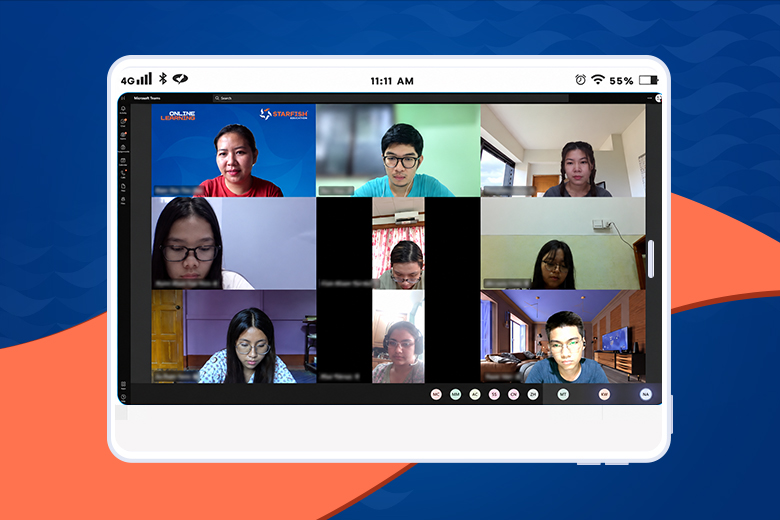
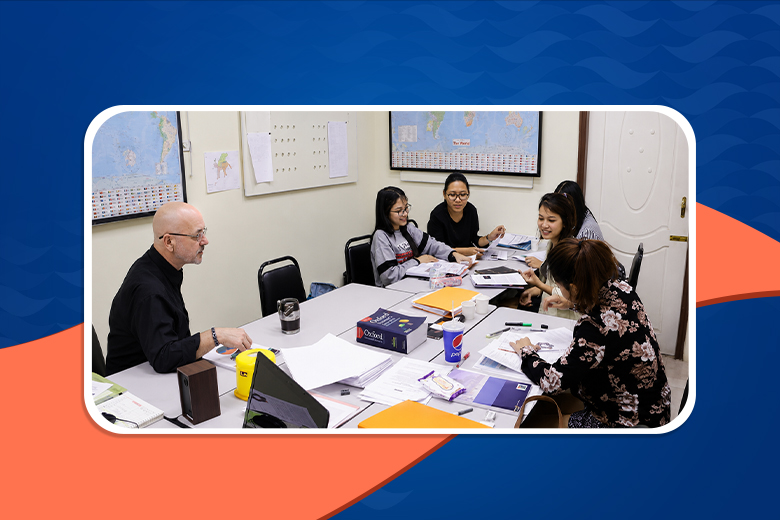
Available both in person and online, our highly interactive classes are led by qualified local and native-speaking teachers. Master English at one of Myanmar’s leading language schools—enroll today and take the next step toward your future.